Bespoke vs Off-the-Shelf Kitchens – What’s the Difference?
When planning a new kitchen, one of the first decisions homeowners face is whether to choose a bespoke kitchen or an off-the-shelf alternative. At first glance, both options may appear similar — cabinetry, worktops, appliances — but the difference in quality, longevity, design flexibility and overall finish can be significant.
Understanding those differences will help you make an informed investment in your home.
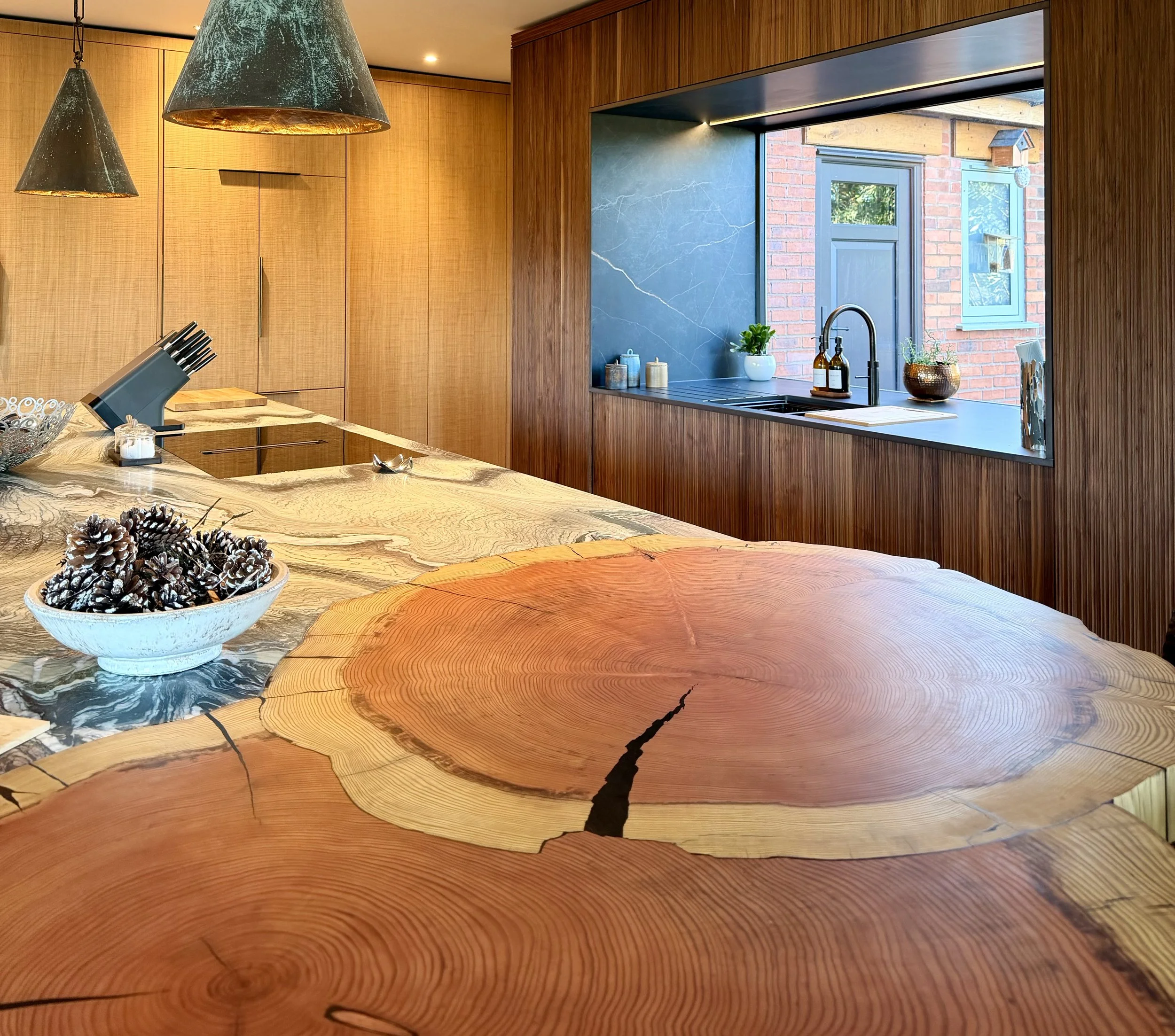
Modern Bespoke Kitchen in Welford-on-Avon, Warwickshire.
What Is an Off-the-Shelf Kitchen?
Off-the-shelf kitchens (sometimes called modular or flat-pack kitchens) are mass-produced in standard sizes. Units are manufactured in bulk, stored in warehouses and supplied in predetermined dimensions. They’re designed to suit the majority of homes at a fixed price point.
These kitchens are often quicker to supply and may appear cost-effective upfront. However, because they rely on standardised cabinet widths and heights, compromises are usually required during installation.
Common limitations include:
Fixed cabinet sizes
Filler panels to bridge gaps
Limited material and finish choices
Standard internal storage layouts
Reduced flexibility in layout design
For straightforward spaces, this approach can work — but it rarely achieves a seamless, fully integrated result.
What Is a Bespoke Kitchen?
A bespoke kitchen is designed and built specifically for your home. Every cabinet is made to measure, meaning there are no filler panels, awkward gaps or forced compromises. The layout, proportions, storage solutions and detailing are tailored entirely to your lifestyle and space.
Rather than selecting from pre-determined modules, bespoke cabinetry is crafted around:
The architecture of your home
Your cooking and entertaining habits
How you move through the space
Your aesthetic preferences
Long-term durability
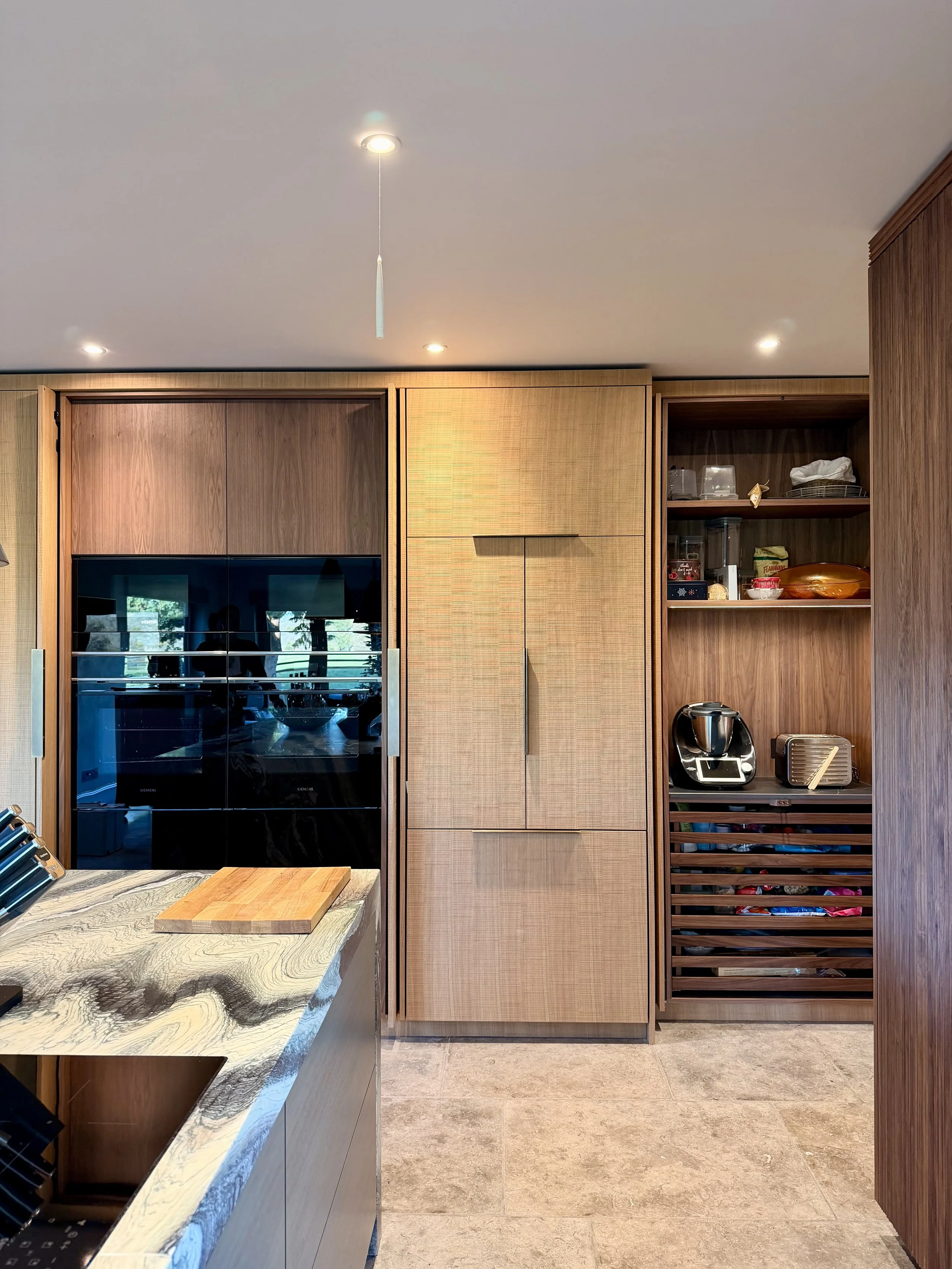
Slide and Hide doors on a bespoke oven run with fridges and larder unit with custom crate style doors.
Because each element is manufactured individually, a bespoke kitchen offers complete design freedom.
1. Fit & Finish
One of the most noticeable differences between bespoke and off-the-shelf kitchens is the final finish.
With mass-produced kitchens, installers often need to use filler strips or adjustments to make standard cabinets fit irregular walls. In older homes especially, walls are rarely perfectly straight.
A bespoke kitchen, however, is measured precisely and built accordingly. Cabinets are scribed to walls, alcoves are utilised fully and proportions are carefully balanced. The result is a seamless, fitted appearance that looks intentional rather than adapted.
2. Quality of Construction
Construction methods differ significantly.
Many off-the-shelf kitchens rely on cam-and-dowel systems and thinner materials to allow flat-pack transport and quick assembly. While functional, they are not always designed for decades of daily use.
Bespoke cabinetry is typically:
Rigid-built rather than flat-pack
Constructed using stronger joinery techniques
Made from higher-grade materials
Finished with greater attention to detail
This leads to improved durability, strength and long-term performance.
A well-built bespoke kitchen can last decades — not just years.
3. Design Freedom
With an off-the-shelf kitchen, you are working within a system. Cabinet widths are fixed. Internal storage is standardised. Colour and finish options are limited to a predefined range.
Bespoke kitchens remove those restrictions.
You can customise:
Cabinet dimensions
Door styles and detailing
Paint colours or timber finishes
Internal storage configurations
Island proportions
Decorative elements
Hardware and fittings
This freedom allows the kitchen to truly reflect your home and personal style.
4. Storage & Functionality
Storage is one of the most overlooked differences between bespoke and modular kitchens.
Off-the-shelf cabinets usually contain standard shelves or drawers. In contrast, bespoke kitchens are designed around how you actually use your space.
For example:
Deeper pan drawers tailored to your cookware
Custom larder units built to suit your shopping habits
Hidden appliance garages
Integrated recycling storage
Purpose-built spice drawers
Feature shelving designed around your crockery
The result is a kitchen that functions intuitively.
5. Long-Term Value
While off-the-shelf kitchens can appear more affordable initially, bespoke kitchens often provide better long-term value.
A kitchen is one of the most important rooms in a home — both for everyday living and resale value. A thoughtfully designed, handcrafted kitchen can enhance:
Property desirability
Perceived quality of the home
Architectural harmony
Longevity of the interior
6. The Experience
There is also a difference in the design experience itself.
With off-the-shelf suppliers, the process often involves selecting from preset combinations. With bespoke cabinetry, the process is collaborative and design-led.
You work closely with the maker to develop a layout that suits your home and lifestyle. Decisions are intentional rather than limited by stock availability.
For many homeowners, this personalised service is just as valuable as the finished product.
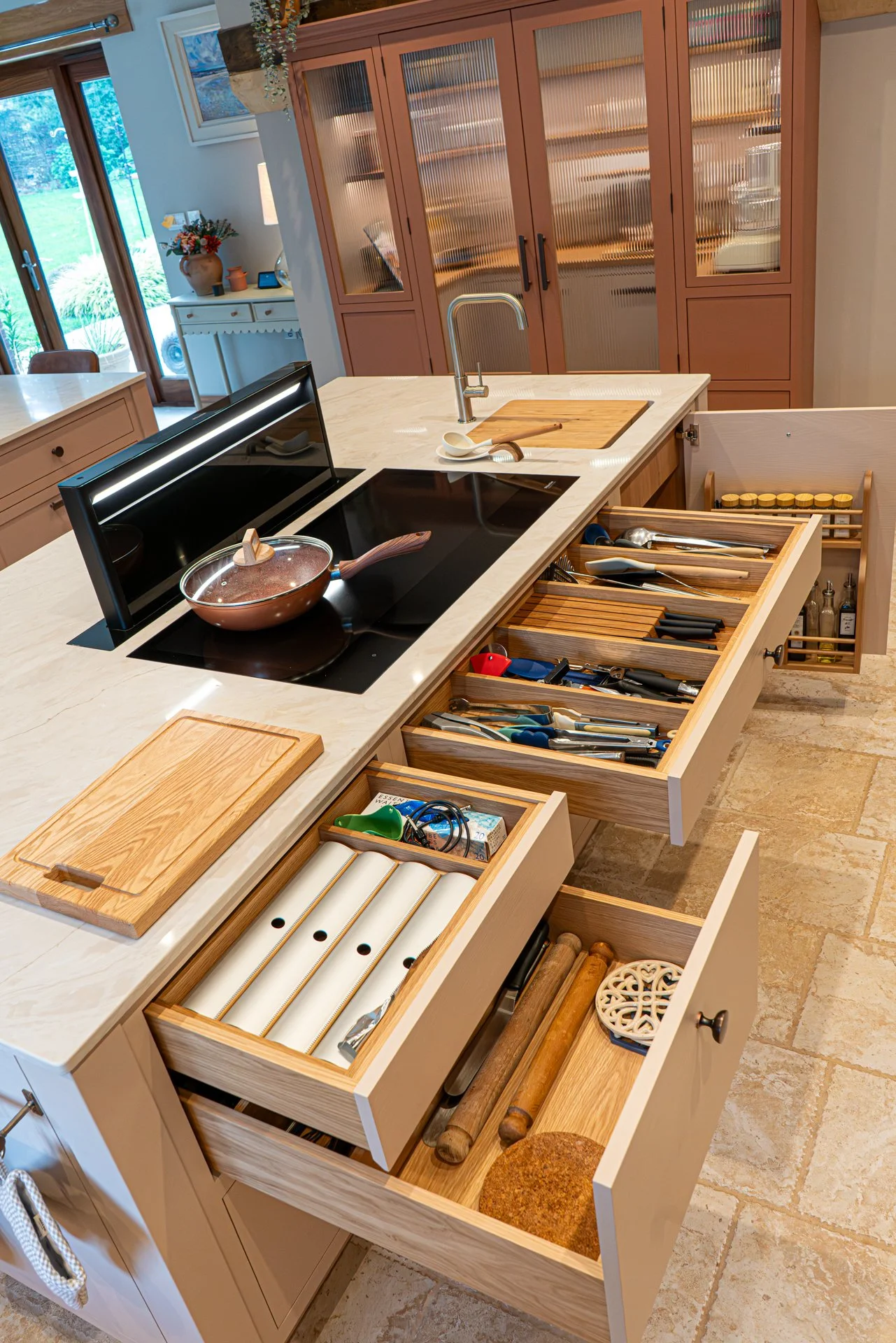
Bespoke in-frame kitchen with custom drawers and spice racks built to customers specifications.
Which Option Is Right for You?
There is no universal answer — it depends on priorities.
If budget and speed are the main drivers, a modular kitchen may be sufficient.
If long-term quality, precise fit, tailored storage and architectural harmony matter most, a bespoke kitchen offers clear advantages.
Ultimately, the kitchen is the heart of the home. Investing in thoughtful design and craftsmanship ensures it remains a space you enjoy for years to come.
Considering a Bespoke Kitchen?
If you're planning a new kitchen in Warwickshire, Worcestershire or The Cotswolds, a bespoke approach ensures your space is built around you — not adapted from a template.
Contact us if you would like to book an appointment.